$59.99
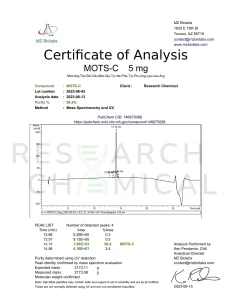
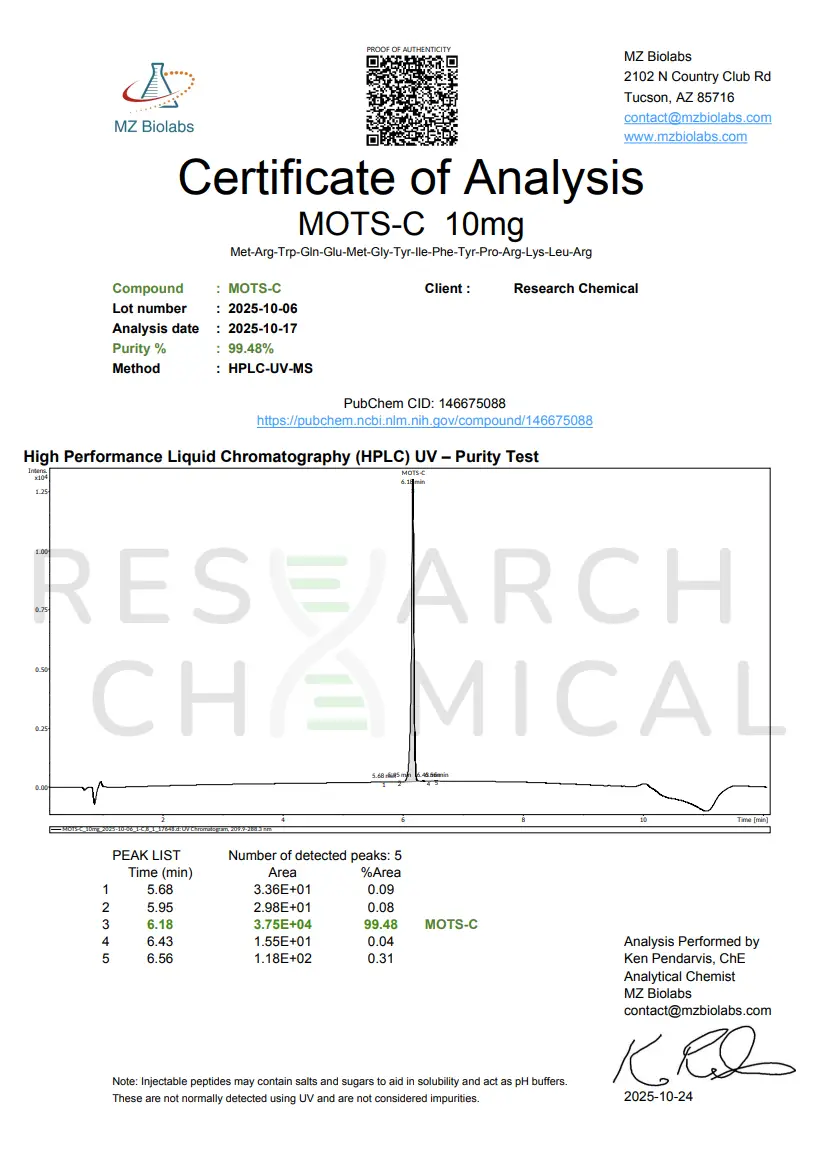
This item has been third-party tested by accredited U.S. laboratories and confirmed to meet a minimum purity of 98% through rigorous verification standards.
MOTS-c is examined in research settings as a mitochondrial-derived peptide, encoded within mitochondrial DNA and translated in response to specific cellular conditions. Research involving MOTS-c focuses on mitochondrial signaling pathways, peptide-mediated communication with nuclear gene expression, and cellular adaptation mechanisms under controlled laboratory conditions.
This compound is supplied exclusively for scientific and analytical research and is not intended for consumer, clinical, or therapeutic use.
$59.99
Mitochondria-Derived Regulatory Peptide
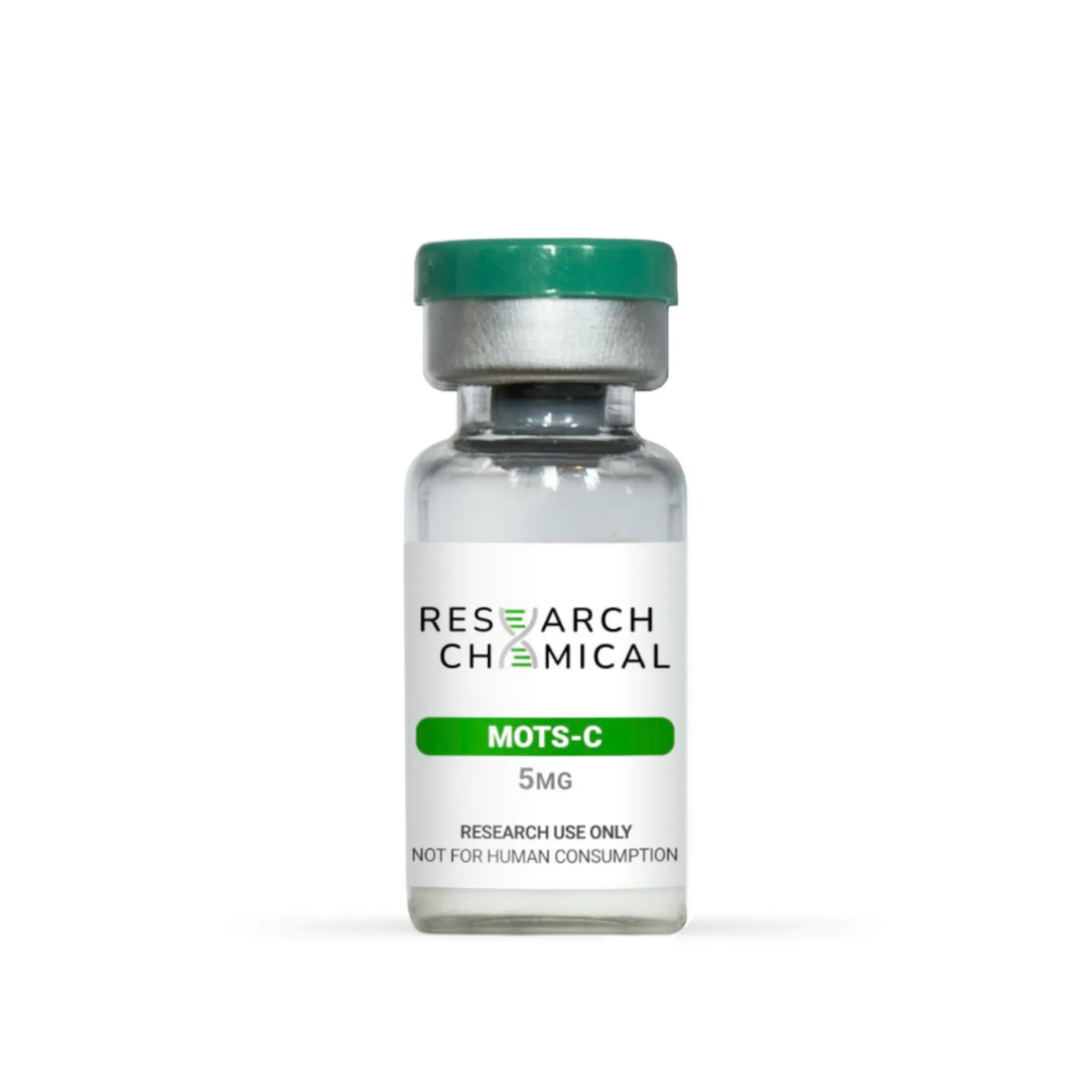
MOTS-c is a mitochondria-encoded peptide supplied exclusively for laboratory and analytical research purposes. This compound is studied in controlled research environments for its role in mitochondrial signaling, nuclear–mitochondrial communication, and cellular stress-response research models.
Each batch of MOTS-c is independently third-party tested to verify identity and purity, supporting accuracy and reproducibility in scientific research applications.
MOTS-c is studied in laboratory and preclinical research environments to better understand how mitochondria-derived peptides participate in cellular signaling and regulatory networks. Researchers examine this compound to explore:
As part of a growing class of mitochondrial signaling peptides, MOTS-c serves as a research model for intracellular communication mechanisms.
In experimental models, MOTS-c is examined for its role in cellular signaling pathways associated with mitochondrial activity and gene expression regulation. Research focuses on signal coordination, transcriptional modulation, and adaptive cellular responses within controlled laboratory systems.
These investigations are mechanistic and exploratory and do not imply metabolic, energetic, physiological, or therapeutic outcomes.
MOTS-c supplied by ResearchChemical.com is produced under controlled peptide synthesis conditions to support compound integrity, purity, and reproducibility.
Manufacturing and verification standards include:
These measures ensure transparency and reliability for laboratory research use.
Specifications
Laboratory supplies and dilution solutions are not included.
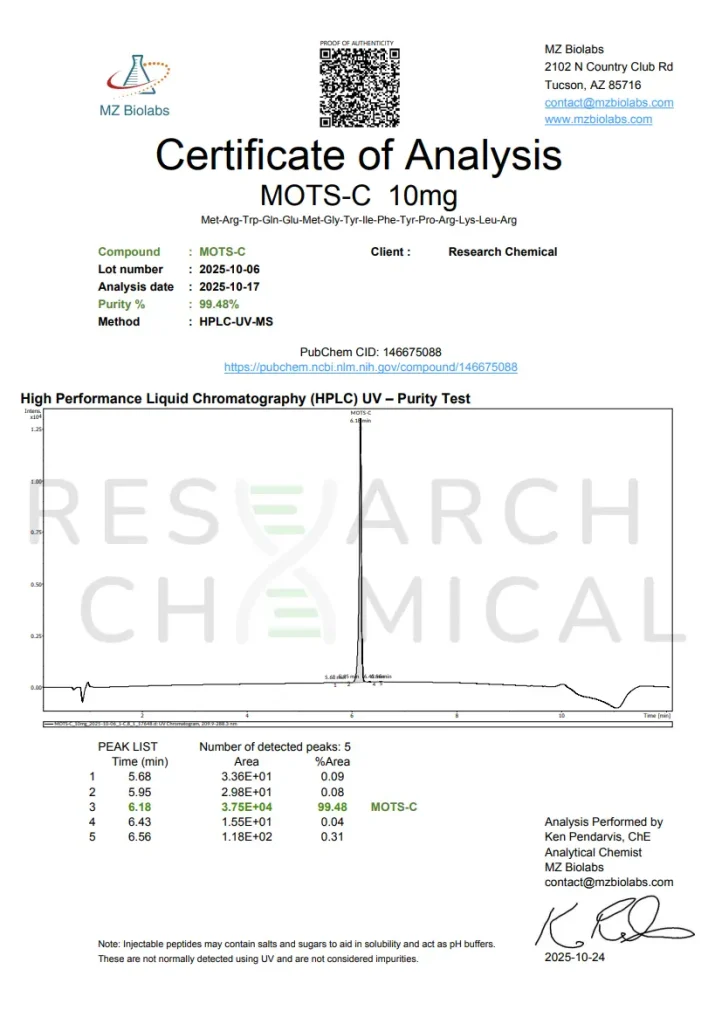
Research Chemical products are third-party tested by MZ Biolabs, an independent laboratory based in Arizona. Each batch is analyzed to ensure accuracy, purity, and that all specifications are met.
Store MOTS-c in a cool, dry environment away from direct light. Refrigerate after reconstitution, if applicable, to maintain peptide stability. Avoid repeated freeze-thaw cycles and follow standard laboratory handling protocols to prevent contamination or degradation.
By purchasing from ResearchChemical.com, you acknowledge that you are acquiring research chemicals intended solely for scientific investigation.
MOTS-c is:
The information provided on this page is for educational and informational purposes only and should not be interpreted as medical advice. ResearchChemical.com assumes no liability for misuse, improper handling, or use outside of controlled research environments. It is the purchaser’s responsibility to ensure compliance with all applicable laws and regulations.

MOTS-c plays a significant role in research related to energy regulation and enhancing cellular energy levels. It is being studied for how it influences glucose transporters, enhances insulin sensitivity, and promotes mitochondrial function, all contributing to improved energy metabolism and exercise capacity.
MOTS-c peptide and other mitochondrial-derived peptides play a crucial role in enhancing mitochondrial communication, protecting lean body mass, and improving mitochondrial function as seen in animal studies. It has been studied for its potential benefits in addressing hepatic mitochondrial dysfunction and age-related insulin resistance. These studies are still ongoing.
The mitochondrial encoded peptide MOTS-c was tested to regulate nuclear gene expression, improve diet-induced insulin resistance, and enhance cellular energy levels in recent studies. It has shown potential benefits in addressing age-dependent insulin resistance, endothelial cell dysfunction, and metabolic stress.
Lorem ipsum dolor sit amet, consectetur adipiscing elit. Ut elit tellus, luctus nec ullamcorper mattis, pulvinar dapibus leo.
Research Chemical products are third-party tested by MZ Biolabs, an independent laboratory based in Arizona. Each batch is analyzed to ensure accuracy, purity, and that all specifications are met.

By purchasing from ResearchChemical.com, you acknowledge that you are acquiring research chemicals intended solely for scientific investigation.
MOTS-c is:
The information provided on this page is for educational and informational purposes only and should not be interpreted as medical advice. ResearchChemical.com assumes no liability for misuse, improper handling, or use outside of controlled research environments. It is the purchaser’s responsibility to ensure compliance with all applicable laws and regulations.
1. Lee C, Zeng J, Drew BG, et al. The mitochondrial-derived peptide MOTS-c promotes metabolic homeostasis and reduces obesity and insulin resistance. Cell Metabolism. 2015 Apr 7;21(3):443-54. doi: 10.1016/j.cmet.2015.02.009.
2. Wan, W., Zhang, L., Lin, Y., Rao, X., Wang, X., Hua, F., & Ying, J. (2023). Mitochondria-derived peptide MOTS-c: Effects and mechanisms related to stress, metabolism and aging. Journal of Translational Medicine, 21(1), 1-13.
3. Gao, Y., Wei, X., Wei, P., Lu, H., Zhong, L., Tan, J., … & Liu, Z. (2023). MOTS-c Functionally Prevents Metabolic Disorders. Metabolites, 13(1), 125.
4. O’neill, H. M. (2013). AMPK and exercise: glucose uptake and insulin sensitivity. Diabetes & metabolism journal, 37(1), 1-21.
5. Lee, C., Kim, K. H., & Cohen, P. (2016). MOTS-c: a novel mitochondrial-derived peptide regulating muscle and fat metabolism. Free Radical Biology and Medicine, 100, 182-187.
6. Lu, H., Wei, M., Zhai, Y., Li, Q., Ye, Z., Wang, L., … & Lu, Z. (2019). MOTS-c peptide regulates adipose homeostasis to prevent ovariectomy-induced metabolic dysfunction. Journal of Molecular Medicine, 97, 473-485.
7. Priest, C., & Tontonoz, P. (2019). Inter-organ cross-talk in metabolic syndrome. Nature Metabolism, 1(12), 1177-1188.
8. Ruzankina, Y., Schoppy, D. W., Asare, A., Clark, C. E., Vonderheide, R. H., & Brown, E. J. (2009). Tissue regenerative delays and synthetic lethality in adult mice after combined deletion of Atr and Trp53. Nature genetics, 41(10), 1144-1149.
9. Ahn, C. H., Choi, E. H., Kong, B. S., & Cho, Y. M. (2020). Effects of MOTS-c on the mitochondrial function of cells harboring 3243 A to G mutant mitochondrial DNA. Molecular biology reports, 47, 4029-4035.
Please note that the above references provide evidence for the potential benefits of MOTS-c Peptide as stated in the product description. For more in-depth information, kindly refer to these scholarly works.


Join our insider list for the latest research insights, product releases, and special offers—delivered straight to your inbox.