
Phone: 959-333-0983
$79.99 Original price was: $79.99.$69.99Current price is: $69.99.
This item has been third-party tested by accredited U.S. laboratories and confirmed to meet a minimum purity of 98% through rigorous verification standards.
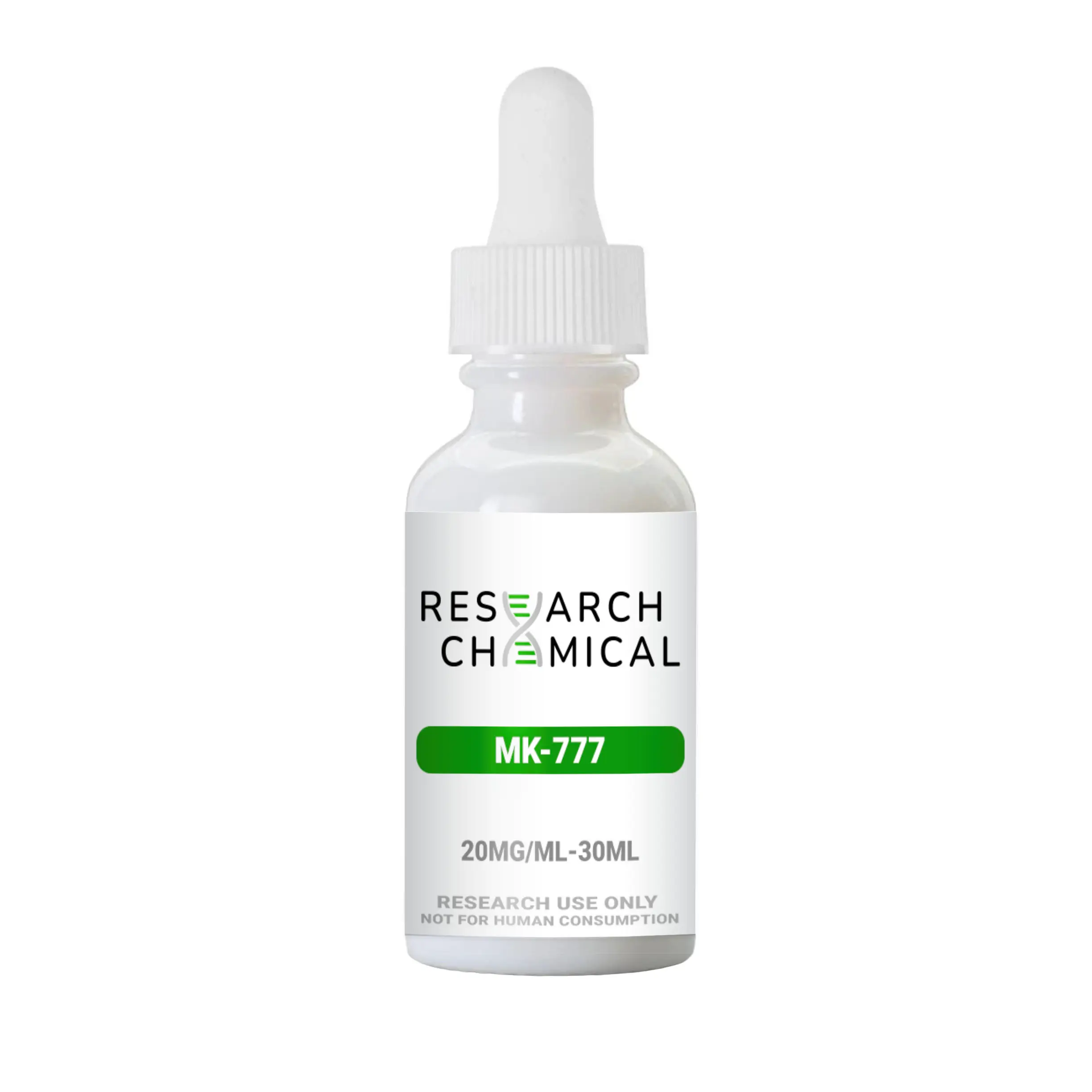
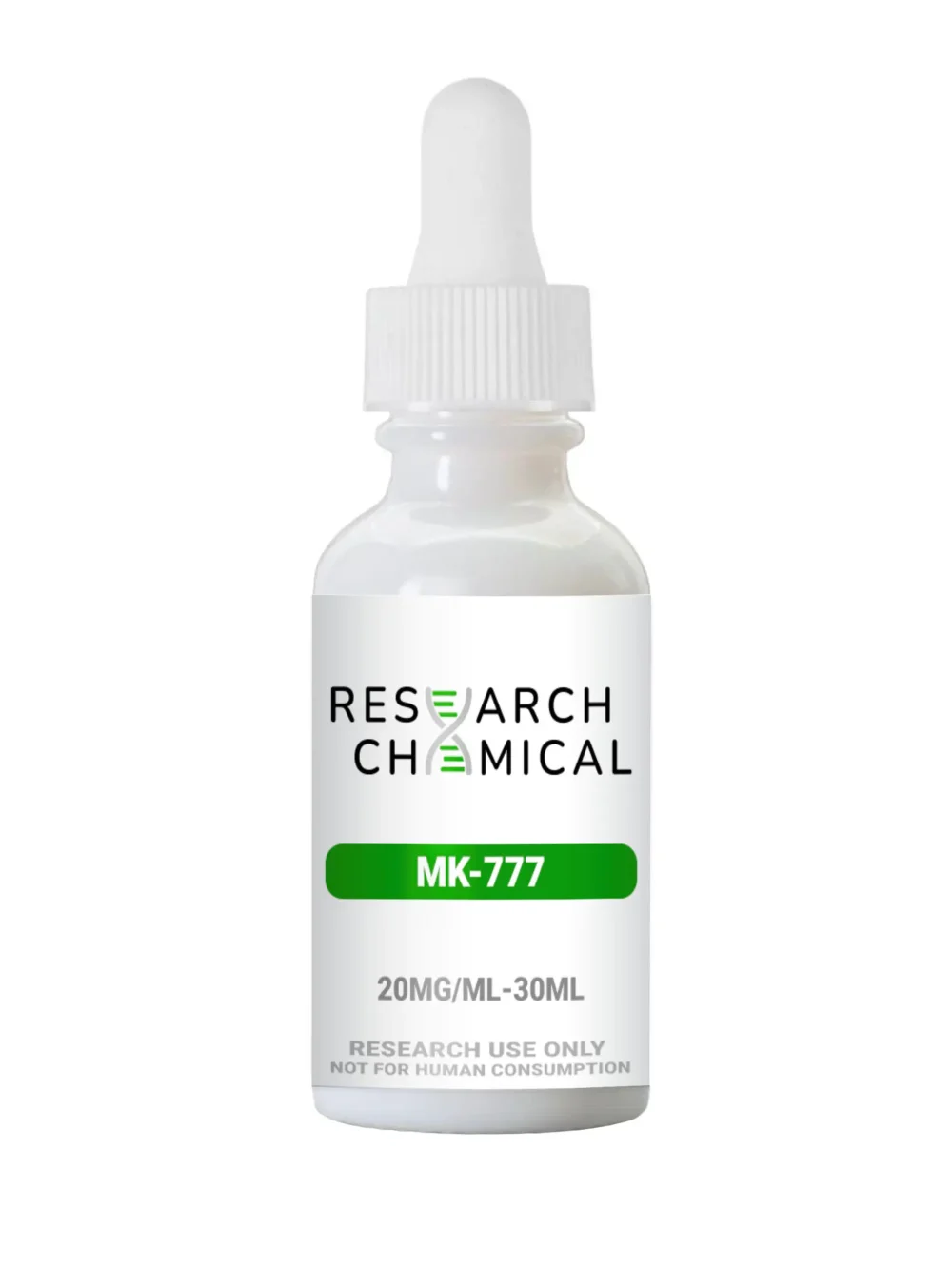
MK-777, also known as Acetamoren, is an investigational non-peptide growth hormone secretagogue (GHS). It is categorized as a ghrelin receptor (GHS-R1a) agonist and is studied for its interaction with endogenous growth hormone signaling pathways.
$79.99 Original price was: $79.99.$69.99Current price is: $69.99.
MK-777, also referred to as Acetamoren, is an investigational non-peptide growth hormone secretagogue (GHS). It is categorized as a ghrelin receptor (GHS-R1a) agonist and is studied for its interaction with endogenous growth hormone signaling pathways.
As a small-molecule compound, MK-777 is designed for oral bioavailability and receptor-level activity. It is structurally distinct from peptide-based secretagogues and is currently limited to research applications.
There are no published human clinical trials evaluating MK-777. All mechanistic understanding is derived from ghrelin receptor pharmacology and related GHS research models.
MK-777 (Acetamoren) is investigated as a non-peptide growth hormone secretagogue that interacts with the ghrelin receptor (GHS-R1a). Research interest in MK-777 centers on its ability to modulate endogenous growth hormone (GH) signaling pathways in controlled laboratory settings.
Mechanistic studies of GHS-R1a agonists, including MK-777 analogs like MK-677, suggest that receptor activation can influence:
MK-777 is studied primarily in preclinical and in vitro models to explore potential GH-mediated cellular effects, tissue signaling interactions, and peptide-mimetic small molecule activity.
Currently, no published human clinical trials exist for MK-777, and all research is limited to laboratory investigations. This scientific context provides researchers with a mechanistic framework to evaluate MK-777 in experimental and analytical studies.
MK-777 is investigated for its interaction with the growth hormone secretagogue receptor (GHS-R1a), the same receptor activated by endogenous ghrelin.
In established research models, GHS-R1a activation has been shown to:
MK-777 remains an investigational compound and has not undergone formal clinical evaluation in humans.
This MK-777 liquid is formulated using:
This dual-solvent system is selected to:
Solvent systems are selected based on compound chemistry; not cost reduction.
This MK-777 (Acetamoren) solution supplied by ResearchChemical.com is prepared under controlled formulation conditions and verified per batch to meet stated specifications.
Product-specific attributes include:
Standard testing includes:
By purchasing from ResearchChemical.com, you acknowledge that you are acquiring research chemicals intended solely for scientific investigation.
These products:
ResearchChemical.com assumes no liability for misuse, improper handling, or use outside of controlled laboratory settings.
No. While both are ghrelin receptor agonists, MK-777 is a distinct investigational compound with no published human clinical trials.
Yes. Every batch is third-party tested and verified before release.
This formulation uses PEG-400 and Ethanol to maintain compound stability and solubility.
No. MK-777 is an investigational research compound only.
Lorem ipsum dolor sit amet, consectetur adipiscing elit. Ut elit tellus, luctus nec ullamcorper mattis, pulvinar dapibus leo.
Standard testing includes:
By purchasing from ResearchChemical.com, you acknowledge that you are acquiring research chemicals intended solely for scientific investigation.
These products:
ResearchChemical.com assumes no liability for misuse, improper handling, or use outside of controlled laboratory settings.
1. Howard, A. D., Feighner, S. D., Cully, D. F., Arena, J. P., Liberator, P. A., Rosenblum, C. I., … & Van der Ploeg, L. H. (1996). A receptor in pituitary and hypothalamus that functions in growth hormone release. Science, 273(5277), 974-977.
2. Kojima, M., Hosoda, H., Date, Y., Nakazato, M., Matsuo, H., & Kangawa, K. (1999). Ghrelin is a growth-hormone-releasing acylated peptide from stomach. Nature, 402(6762), 656-660.
3. Jacks, T. H. O. M. A. S., Smith, R., Judith, F., Schleim, K., Frazier, E., Chen, H., … & Hickey, G. (1996). MK-0677, a potent, novel, orally active growth hormone (GH) secretagogue: GH, insulin-like growth factor I, and other hormonal responses in beagles. Endocrinology, 137(12), 5284-5289.
4. Nass, R., Pezzoli, S. S., Oliveri, M. C., Patrie, J. T., Harrell Jr, F. E., Clasey, J. L., … & Thorner, M. O. (2008). Effects of an oral ghrelin mimetic on body composition and clinical outcomes in healthy older adults: a randomized trial. Annals of internal medicine, 149(9), 601-611.
5. Murphy, M. G., Plunkett, L. M., Gertz, B. J., He, W., Wittreich, J., Polvino, W. M., & Clemmons, D. R. (1998). MK-677, an orally active growth hormone secretagogue, reverses diet-induced catabolism. The Journal of Clinical Endocrinology & Metabolism, 83(2), 320-325.
6. Camina, J. P. (2006). Cell biology of the ghrelin receptor. Journal of neuroendocrinology, 18(1), 65-76.
Join our insider list for the latest research insights, product releases, and special offers—delivered straight to your inbox.