Phone: 959-333-0983

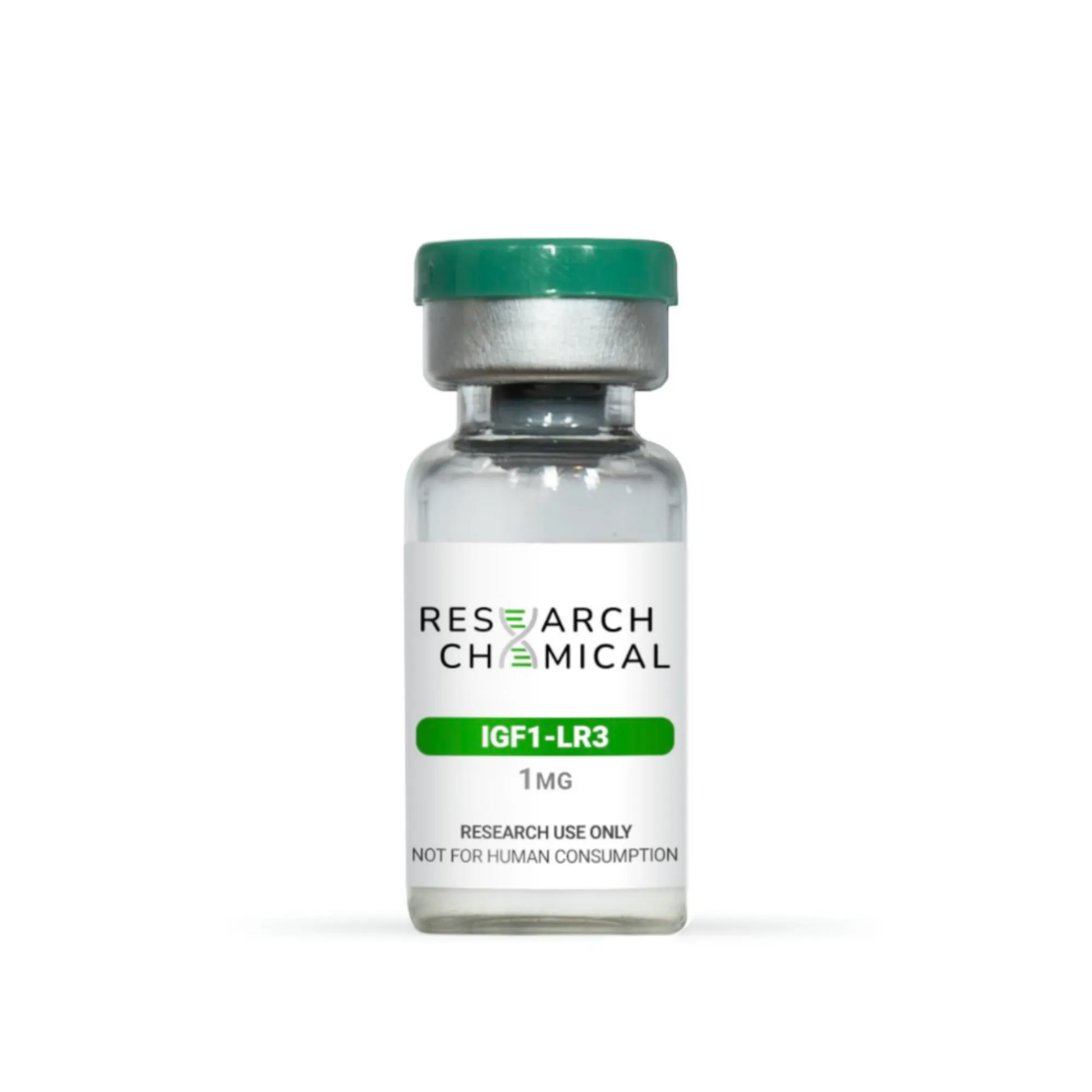
IGF-1 LR3 1MG

4.8
(15)
1K+ bought in past month
Big Winter Deal

$129.99

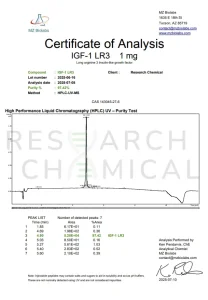
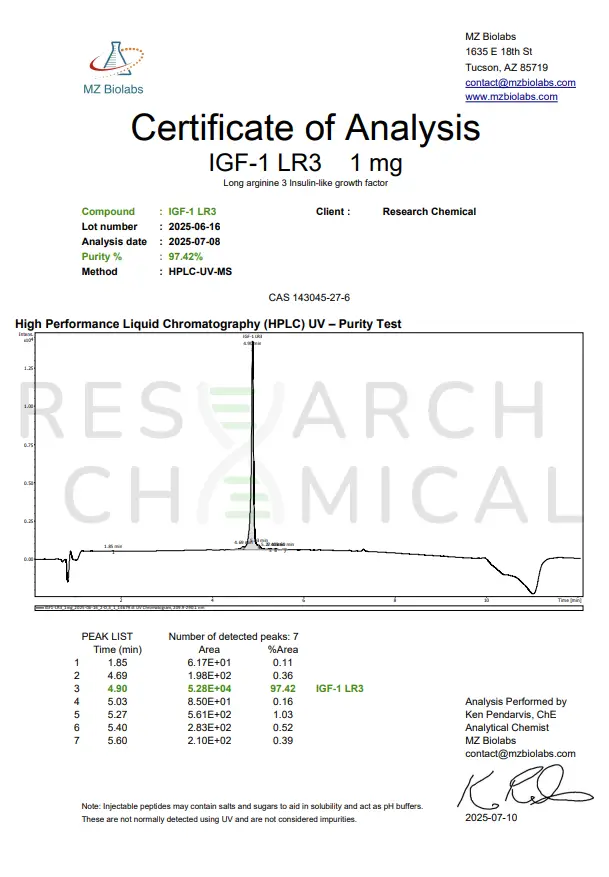
This item has been third-party tested by accredited U.S. laboratories and confirmed to meet a minimum purity of 98% through rigorous verification standards.

IGF-1 LR3 Research Context

IGF-1 LR3 is examined in research settings for its role as a long-acting IGF-1 analog, designed to interact with IGF-1 receptors while exhibiting reduced binding to IGF-binding proteins.

Research involving IGF-1 LR3 focuses on receptor activation dynamics, intracellular signaling cascades, and peptide stability under controlled experimental conditions.

Buy now

$129.99

FREE Returns
In Stock
Quantity
Ships from
USA

IGF-1 LR3 Peptide 1 mg

Long-Acting Insulin-Like Growth Factor-1 Analog

IGF-1 LR3 is a synthetic peptide supplied exclusively for laboratory and analytical research purposes. This compound is studied in controlled research environments for its interaction with insulin-like growth factor receptors (IGF-1R) and its role in cellular signaling pathway research models.

Each batch of IGF-1 LR3 is independently third-party tested to verify identity and purity, supporting accuracy and reproducibility in scientific research applications.

Scientific Context: Why IGF-1 LR3 Is Studied

Insulin-like growth factor-1 (IGF-1) is a peptide hormone involved in complex growth factor signaling networks. In research settings, IGF-1 signaling is studied to better understand:

  • Receptor-mediated intracellular signaling cascades
  • Growth factor–driven gene transcription
  • Cellular proliferation and differentiation models
  • Metabolic pathway coordination

Because endogenous IGF-1 is rapidly regulated by binding proteins and enzymatic degradation, modified analogs are often used in research to allow extended observation of signaling behavior.

Mechanism of Action: IGF-1 Receptor Signaling

In laboratory models, IGF-1 LR3 binds to the IGF-1 receptor (IGF-1R), a receptor tyrosine kinase involved in growth factor signal transduction. Receptor activation initiates a series of intracellular signaling pathways, including:

  • PI3K/Akt signaling cascades
  • MAPK/ERK pathway activation
  • Transcriptional regulation of growth-related genes

Research involving IGF-1 receptor signaling focuses on pathway coordination, signal amplification, and temporal regulation, rather than on physiological outcomes.

Molecular Structure and Characteristics of IGF-1 LR3

IGF-1 LR3 is a structurally modified IGF-1 analog that includes amino acid substitutions designed to reduce affinity for IGF-binding proteins while maintaining receptor interaction.

From a research perspective, IGF-1 LR3 is examined for:

  • Increased molecular stability
  • Extended receptor binding duration
  • Altered pharmacokinetic behavior in experimental systems
  • Enhanced suitability for long-duration signaling studies

These properties allow researchers to study growth factor signaling persistence without rapid attenuation seen with native IGF-1.

Why IGF-1 LR3 Is Studied in Research

IGF-1 LR3 is studied to support investigations into growth factor signaling duration and receptor kinetics. Its reduced interaction with binding proteins enables researchers to observe sustained receptor activation and downstream signaling patterns in controlled experimental environments.

Research applications include:

  • Growth factor receptor dynamics
  • Signal persistence and attenuation models
  • Cellular growth signaling frameworks
  • Comparative studies between native and modified IGF-1 analogs

These studies contribute to a broader scientific understanding of growth factor biology without implying clinical or therapeutic use.

Stability and Experimental Handling Considerations

In research environments, IGF-1 LR3 is commonly supplied in lyophilized form, supporting:

  • Extended shelf stability
  • Reduced degradation prior to use
  • Accurate preparation of experimental solutions

Proper handling and storage protocols are essential to maintaining peptide integrity and ensuring reproducible research outcomes.

Frequently Asked Questions

IGF1-LR3 is a promising new research tool with the potential to improve the treatment of a variety of conditions. However, more research is needed to fully understand its safety and efficacy. If further research confirms the potential benefits of IGF1-LR3, it could become a valuable tool for treating disease in the future.

There are several limitations to current IGF1-LR3 research, including:

  • A lack of long-term safety data: Most studies of IGF1-LR3 have been small and short-term. More research is needed to determine the long-term safety of this compound.

  • A lack of understanding of its mechanism of action: While researchers know that IGF1-LR3 promotes growth and regeneration, they do not fully understand how it works. This makes it difficult to predict its potential side effects and to develop effective treatment protocols.

  • The need for more clinical trials: There is a need for more clinical trials to evaluate the safety and efficacy of IGF1-LR3 in mammals.

IGF1-LR3 is a potent growth factor, and there is some concern that it could have negative side effects, such as:

  • Tumor growth: IGF1-LR3 has been shown to promote the growth of some types of cancer cells in vitro. More research is needed to determine whether it has the same effect in vivo as it did not affect the rate of tumor growth in a recent study.

  • Hypoglycemia: IGF1-LR3 can lower blood sugar levels. This could be beneficial for people with diabetes, but it could also lead to hypoglycemia if not carefully monitored.

IGF1-LR3 is being studied for its potential applications in a variety of research areas, including:

  • Muscle growth and regeneration: IGF1-LR3 has been shown to promote muscle growth and regeneration in animal models. This suggests that it may have potential applications for treating muscle wasting conditions, such as sarcopenia and muscle injuries.

  • Tissue repair: IGF1-LR3 has also been shown to promote tissue repair in animal models. This suggests that it may have potential applications for treating conditions such as wounds and burns.

  • Diabetes: IGF1-LR3 is being studied for its potential use in the treatment of diabetes. Early research suggests that it may help to improve glucose control and insulin sensitivity.

IGF1-LR3 is not a human growth hormone. Instead, it is a synthetic analog of IGF-1, a naturally occurring hormone that plays a role in growth and development. IGF1-LR3 differs from IGF-1 in two main ways:

  • Half-life: IGF1-LR3 has a longer half-life than IGF-1, which means that it stays in the body for a longer period of time. This makes it more effective for research purposes, as it allows for sustained signaling and a more consistent effect on cells.

  • Binding affinity: IGF1-LR3 has a lower binding affinity for IGF binding proteins than IGF-1. IGF binding proteins are proteins that bind to IGF-1 and regulate its activity. The lower binding affinity of IGF1-LR3 means that it is less likely to be bound by IGF binding proteins and can therefore exert its effects more effectively.

Unlock Exclusive Lab Updates

Ostarine Cardarine SR9009 Stack

Join our insider list for the latest research insights, product releases, and special offers—delivered straight to your inbox.

0