
$129.99
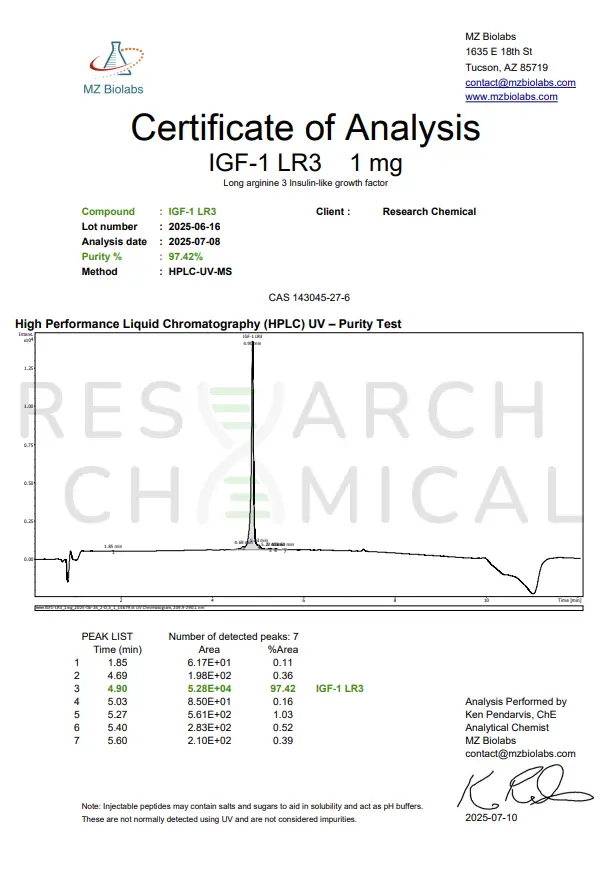
This item has been third-party tested by accredited U.S. laboratories and confirmed to meet a minimum purity of 98% through rigorous verification standards.
Updated COA's
Secure Shipping Guaranteed
Verified for Purity
$129.99
Research Chemical products are third-party tested by MZ Biolabs, an independent laboratory based in Arizona. Each batch is analyzed to ensure accuracy, purity, and that all specifications are met.

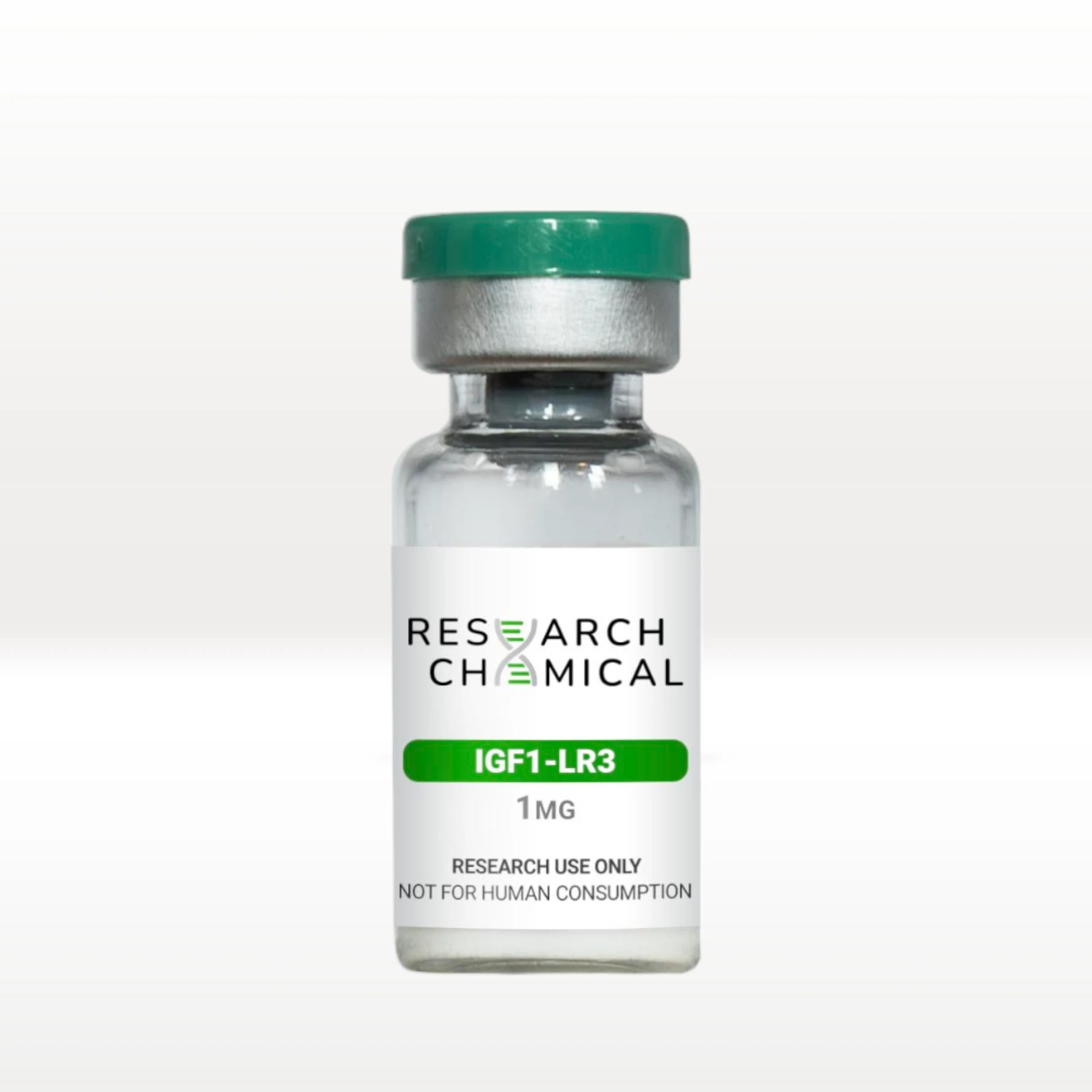
IGF-1 LR3, available through Research Chemicals, is a notable research compound. IGF1-LR3 is an analogue of insulin-like growth factor 1 (IGF-1). It is a protein that is involved in cell growth and proliferation. IGF1-LR3 has a very low affinity towards IGFBPs as compared to IGF-1.
In the study, IGF1-LR3 was administered to fetal sheep to stimulate heart growth. The results showed that IGF1-LR3 increased both myocardial and coronary growth. This suggests that IGF1-LR3 may be a potential therapeutic intervention to improve healthy fetal cardiomyocyte endowment.
The mechanism of action of Insulin-like Growth Factor 1 Long R3 (IGF-1 lr3) represents a focal point of investigation in cellular physiology and therapeutic research. As a synthetic analog of the naturally occurring peptide IGF-1, IGF-1 lr3 is distinguished by structural modifications that confer an extended half-life.
Specifically, research explores the selective engagement of IGF-1 lr3 with the IGF-1 receptor on the cell membrane, highlighting the molecular events that ensue and distinguishing its action from that of the shorter-lived IGF-1 counterpart. Emphasis is placed on elucidating the avoidance of insulin receptor binding, directing IGF-1 lr3 towards the activation of growth-promoting pathways. IGF1-LR3 plays a role in cellular proliferation, protein synthesis, and anabolism.
Insulin-like growth factor 1 Long R3 (IGF1-LR3), a synthetic analog of insulin-like growth factor 1 (IGF-1), has emerged as a promising therapeutic agent with a wide range of potential applications. Its unique properties, including a longer half-life and lower binding affinity for IGF binding proteins (IGFBPs), make it more effective and durable than its natural counterpart. IGF1-LR3 has demonstrated remarkable potential in various areas of medicine, including:
IGF1-LR3 plays a pivotal role in muscle growth and regeneration. It stimulates muscle protein synthesis, promotes the proliferation of satellite cells, and enhances the differentiation of muscle fibers. This makes it a promising therapeutic option for treating muscle-wasting conditions such as sarcopenia, cachexia, and muscle injuries.
IGF1-LR3 has shown remarkable efficacy in accelerating tissue repair and wound healing. It promotes cell proliferation, angiogenesis, and collagen synthesis, essential processes for tissue regeneration. This property holds promise for treating a variety of conditions, including surgical incisions, burns, and diabetic ulcers.
IGF1-LR3 may play a beneficial role in diabetes management by improving glucose control and insulin sensitivity. It enhances glucose uptake by cells and modulates insulin signaling pathways, potentially offering a novel approach to diabetes treatment.
IGF1-LR3 has been shown to slow down the aging process and delay the onset of age-related diseases. It promotes cellular repair, reduces oxidative stress, and enhances mitochondrial function, potentially contributing to longevity and healthy aging.
IGF-1 LR3 is a synthetic analog of IGF-1, a naturally occurring hormone. While IGF-1 LR3 shares some similar effects with IGF-1, it is essential to note that it is a distinct substance with its own unique properties. More research is needed to fully understand the long-term effects of IGF-1 LR3 in humans.
IGF-1 LR3 is still considered an investigational compound, meaning the FDA has not yet approved it for any medical use. This means that there is limited information available about its safety and efficacy.
Advance Your Research with the addition of pure, tested IGF-1 LR3 peptide.
IGF-1 LR3 (Insulin-like Growth Factor-1 Long R3) is distributed strictly as a research chemical. It is not intended for human consumption, medical treatment, or veterinary applications.
For Research Use Only: IGF-1 LR3 is supplied exclusively for controlled laboratory testing and in vitro research.
Abuse Potential: Some may attempt to misuse IGF-1 LR3 for physique enhancement, muscle growth, or performance purposes. Such use is unsafe, unregulated, and may result in serious health risks.
Unstudied Safety Profile: The pharmacology, toxicology, and long-term safety of IGF-1 LR3 in humans have not been established.
Liability Disclaimer: Research Chemical accepts no responsibility for misuse, abuse, or handling of IGF-1 LR3 outside of legitimate research environments.
By purchasing IGF-1 LR3, you confirm it will be used solely for lawful scientific research.
1. Bailes, J., & Soloviev, M. (2021). Insulin-like growth factor-1 (IGF-1) and its monitoring in medical diagnostics and sports. Biomolecules, 11(2), 217.
2. Chakravarthy, M. V. (2000). Modulation of replicative senescence of skeletal muscle satellite cells by insulin-like growth factor-I (IGF-I) (Doctoral dissertation, The University of Texas Graduate School of Biomedical Sciences at Houston).
3. Dyer, A. H., Vahdatpour, C., Sanfeliu, A., & Tropea, D. (2016). The role of Insulin-Like Growth Factor 1 (IGF-1) in brain development, maturation, and neuroplasticity. Neuroscience, 325, 89-99.
4. Ketha, H., & Singh, R. J. (2015). Clinical assays for quantitation of insulin-like growth factor-1 (IGF-1). Methods, 81, 93-98.
5. Kyle, A. H., Baker, J. H., & Minchinton, A. I. (2012). Targeting quiescent tumor cells via oxygen and IGF-I supplementation. Cancer research, 72(3), 801-809.
6. Miescher, I., Rieber, J., Calcagni, M., & Buschmann, J. (2023). In Vitro and In Vivo Effects of IGF-1 Delivery Strategies on Tendon Healing: A Review. International Journal of Molecular Sciences, 24(3), 2370.
7. Sundgren, N. C., Giraud, G. D., Schultz, J. M., Lasarev, M. R., Stork, P. J., & Thornburg, K. L. (2003). Extracellular signal-regulated kinase and phosphoinositol-3 kinase mediate IGF-1-induced proliferation of fetal sheep cardiomyocytes. American Journal of Physiology-Regulatory, Integrative and Comparative Physiology, 285(6), R1481-R1489.
8. Thornton, K. J., Kamanga-Sollo, E., White, M. E., & Dayton, W. R. (2016). Active G protein–coupled receptors (gpcr), matrix metalloproteinases 2/9 (mmp2/9), heparin-binding epidermal growth factor (hbegf), epidermal growth factor receptor (egfr), erbb2, and insulin-like growth factor 1 receptor (igf-1r) are necessary for trenbolone acetate–induced alterations in protein turnover rate of fused bovine satellite cell cultures. Journal of animal science, 94(6), 2332-2343.
9. White, A., Stremming, J., Brown, L. D., & Rozance, P. J. (2023). Attenuated glucose-stimulated insulin secretion during an acute IGF-1 LR3 infusion into fetal sheep does not persist in isolated islets. Journal of Developmental Origins of Health and Disease, 14(3), 353-361.
10. Yakar, S., & Adamo, M. L. (2012). Insulin-like growth factor 1 physiology: lessons from mouse models. Endocrinology and Metabolism Clinics, 41(2), 231-247.
11. Yakar, S., Werner, H., & Rosen, C. J. (2018). 40 YEARS OF IGF1: Insulin-like growth factors: actions on the skeleton. Journal of molecular endocrinology, 61(1), T115-T137.
IGF1-LR3 is a promising new research tool with the potential to improve the treatment of a variety of conditions. However, more research is needed to fully understand its safety and efficacy. If further research confirms the potential benefits of IGF1-LR3, it could become a valuable tool for treating disease in the future.
There are several limitations to current IGF1-LR3 research, including:
A lack of long-term safety data: Most studies of IGF1-LR3 have been small and short-term. More research is needed to determine the long-term safety of this compound.
A lack of understanding of its mechanism of action: While researchers know that IGF1-LR3 promotes growth and regeneration, they do not fully understand how it works. This makes it difficult to predict its potential side effects and to develop effective treatment protocols.
The need for more clinical trials: There is a need for more clinical trials to evaluate the safety and efficacy of IGF1-LR3 in mammals.
IGF1-LR3 is a potent growth factor, and there is some concern that it could have negative side effects, such as:
Tumor growth: IGF1-LR3 has been shown to promote the growth of some types of cancer cells in vitro. More research is needed to determine whether it has the same effect in vivo as it did not affect the rate of tumor growth in a recent study.
Hypoglycemia: IGF1-LR3 can lower blood sugar levels. This could be beneficial for people with diabetes, but it could also lead to hypoglycemia if not carefully monitored.
IGF1-LR3 is being studied for its potential applications in a variety of research areas, including:
Muscle growth and regeneration: IGF1-LR3 has been shown to promote muscle growth and regeneration in animal models. This suggests that it may have potential applications for treating muscle wasting conditions, such as sarcopenia and muscle injuries.
Tissue repair: IGF1-LR3 has also been shown to promote tissue repair in animal models. This suggests that it may have potential applications for treating conditions such as wounds and burns.
Diabetes: IGF1-LR3 is being studied for its potential use in the treatment of diabetes. Early research suggests that it may help to improve glucose control and insulin sensitivity.
IGF1-LR3 is not a human growth hormone. Instead, it is a synthetic analog of IGF-1, a naturally occurring hormone that plays a role in growth and development. IGF1-LR3 differs from IGF-1 in two main ways:
Half-life: IGF1-LR3 has a longer half-life than IGF-1, which means that it stays in the body for a longer period of time. This makes it more effective for research purposes, as it allows for sustained signaling and a more consistent effect on cells.
Binding affinity: IGF1-LR3 has a lower binding affinity for IGF binding proteins than IGF-1. IGF binding proteins are proteins that bind to IGF-1 and regulate its activity. The lower binding affinity of IGF1-LR3 means that it is less likely to be bound by IGF binding proteins and can therefore exert its effects more effectively.
If you are searching for where to buy IGF-1 LR3 online, you will come across many options. Several companies offer peptides, but unfortunately, not all prioritize quality assurance.
Research Chemical stands out in this landscape. We’re committed to delivering only the finest IGF-LR3 for sale online. When you buy peptides from us, rest assured, you’re opting for top-tier quality.
Our peptides undergo rigorous testing, verified by esteemed American third-party laboratories—labs that welcome phone or email inquiries to confirm their certificates’ authenticity. Our peptides are preserved in lyophilized form inside glass containers and maintained in cool conditions to uphold their potency.
You can trust in our assortment of top-grade research chemicals, all backed by a reassuring 60-day money-back guarantee. Plus, enjoy free shipping for orders over $149, with expedited shipping options available. Subscribers to our newsletter enjoy a 10% discount, and choosing cryptocurrency for payment affords an additional 10% off.
Choose Research Chemical, and you’re not just selecting a seller; you’re opting for verified excellence, secured packaging, prompt deliveries, and exemplary customer service. For any queries about our IGF-LR3 for sale or any other product, don’t hesitate to contact us. We’re here to assist promptly.
Lorem ipsum dolor sit amet, consectetur adipiscing elit. Ut elit tellus, luctus nec ullamcorper mattis, pulvinar dapibus leo.
The mechanism of action of Insulin-like Growth Factor 1 Long R3 (IGF-1 lr3) represents a focal point of investigation in cellular physiology and therapeutic research. As a synthetic analog of the naturally occurring peptide IGF-1, IGF-1 lr3 is distinguished by structural modifications that confer an extended half-life.
Specifically, research explores the selective engagement of IGF-1 lr3 with the IGF-1 receptor on the cell membrane, highlighting the molecular events that ensue and distinguishing its action from that of the shorter-lived IGF-1 counterpart. Emphasis is placed on elucidating the avoidance of insulin receptor binding, directing IGF-1 lr3 towards the activation of growth-promoting pathways. IGF1-LR3 plays a role in cellular proliferation, protein synthesis, and anabolism.
Advance Your Research with the addition of pure, tested IGF-1 LR3 peptide.
IGF-1 LR3 (Insulin-like Growth Factor-1 Long R3) is distributed strictly as a research chemical. It is not intended for human consumption, medical treatment, or veterinary applications.
For Research Use Only: IGF-1 LR3 is supplied exclusively for controlled laboratory testing and in vitro research.
Abuse Potential: Some may attempt to misuse IGF-1 LR3 for physique enhancement, muscle growth, or performance purposes. Such use is unsafe, unregulated, and may result in serious health risks.
Unstudied Safety Profile: The pharmacology, toxicology, and long-term safety of IGF-1 LR3 in humans have not been established.
Liability Disclaimer: Research Chemical accepts no responsibility for misuse, abuse, or handling of IGF-1 LR3 outside of legitimate research environments.
By purchasing IGF-1 LR3, you confirm it will be used solely for lawful scientific research.
1. Bailes, J., & Soloviev, M. (2021). Insulin-like growth factor-1 (IGF-1) and its monitoring in medical diagnostics and sports. Biomolecules, 11(2), 217.
2. Chakravarthy, M. V. (2000). Modulation of replicative senescence of skeletal muscle satellite cells by insulin-like growth factor-I (IGF-I) (Doctoral dissertation, The University of Texas Graduate School of Biomedical Sciences at Houston).
3. Dyer, A. H., Vahdatpour, C., Sanfeliu, A., & Tropea, D. (2016). The role of Insulin-Like Growth Factor 1 (IGF-1) in brain development, maturation, and neuroplasticity. Neuroscience, 325, 89-99.
4. Ketha, H., & Singh, R. J. (2015). Clinical assays for quantitation of insulin-like growth factor-1 (IGF-1). Methods, 81, 93-98.
5. Kyle, A. H., Baker, J. H., & Minchinton, A. I. (2012). Targeting quiescent tumor cells via oxygen and IGF-I supplementation. Cancer research, 72(3), 801-809.
6. Miescher, I., Rieber, J., Calcagni, M., & Buschmann, J. (2023). In Vitro and In Vivo Effects of IGF-1 Delivery Strategies on Tendon Healing: A Review. International Journal of Molecular Sciences, 24(3), 2370.
7. Sundgren, N. C., Giraud, G. D., Schultz, J. M., Lasarev, M. R., Stork, P. J., & Thornburg, K. L. (2003). Extracellular signal-regulated kinase and phosphoinositol-3 kinase mediate IGF-1-induced proliferation of fetal sheep cardiomyocytes. American Journal of Physiology-Regulatory, Integrative and Comparative Physiology, 285(6), R1481-R1489.
8. Thornton, K. J., Kamanga-Sollo, E., White, M. E., & Dayton, W. R. (2016). Active G protein–coupled receptors (gpcr), matrix metalloproteinases 2/9 (mmp2/9), heparin-binding epidermal growth factor (hbegf), epidermal growth factor receptor (egfr), erbb2, and insulin-like growth factor 1 receptor (igf-1r) are necessary for trenbolone acetate–induced alterations in protein turnover rate of fused bovine satellite cell cultures. Journal of animal science, 94(6), 2332-2343.
9. White, A., Stremming, J., Brown, L. D., & Rozance, P. J. (2023). Attenuated glucose-stimulated insulin secretion during an acute IGF-1 LR3 infusion into fetal sheep does not persist in isolated islets. Journal of Developmental Origins of Health and Disease, 14(3), 353-361.
10. Yakar, S., & Adamo, M. L. (2012). Insulin-like growth factor 1 physiology: lessons from mouse models. Endocrinology and Metabolism Clinics, 41(2), 231-247.
11. Yakar, S., Werner, H., & Rosen, C. J. (2018). 40 YEARS OF IGF1: Insulin-like growth factors: actions on the skeleton. Journal of molecular endocrinology, 61(1), T115-T137.


Join our insider list for the latest research insights, product releases, and special offers—delivered straight to your inbox.