$49.99
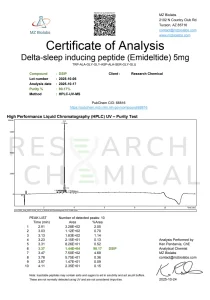
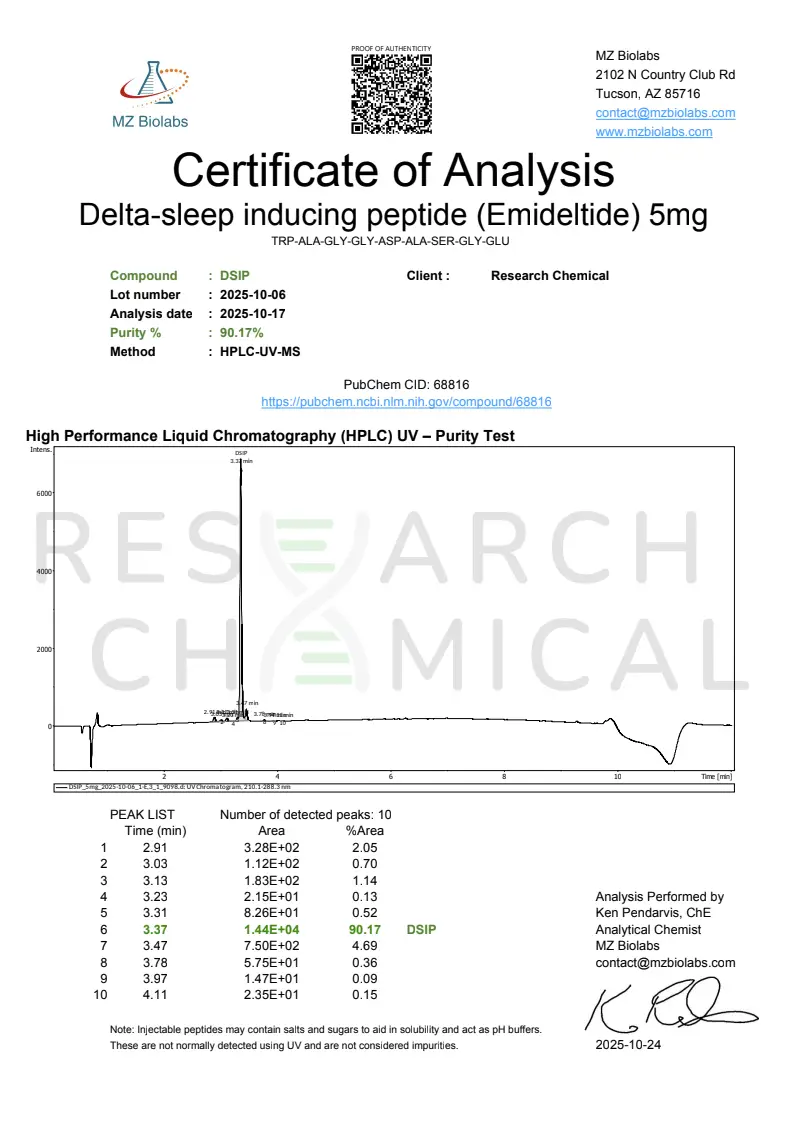
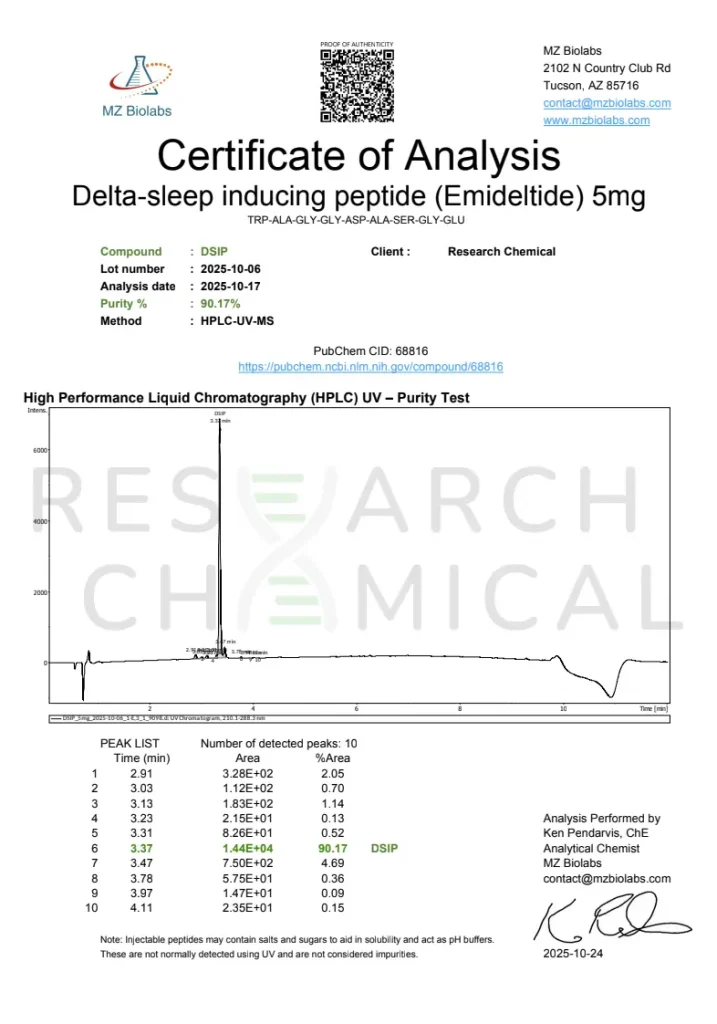
This item has been third-party tested by accredited U.S. laboratories and confirmed to meet a minimum purity of 98% through rigorous verification standards.
DSIP is examined in research settings as a neuropeptide involved in central nervous system signaling frameworks.
Research involving DSIP focuses on peptide–receptor interactions, signal modulation pathways, and neuroendocrine communication mechanisms under controlled experimental conditions.
$49.99
Synthetic Neuropeptide Research Compound
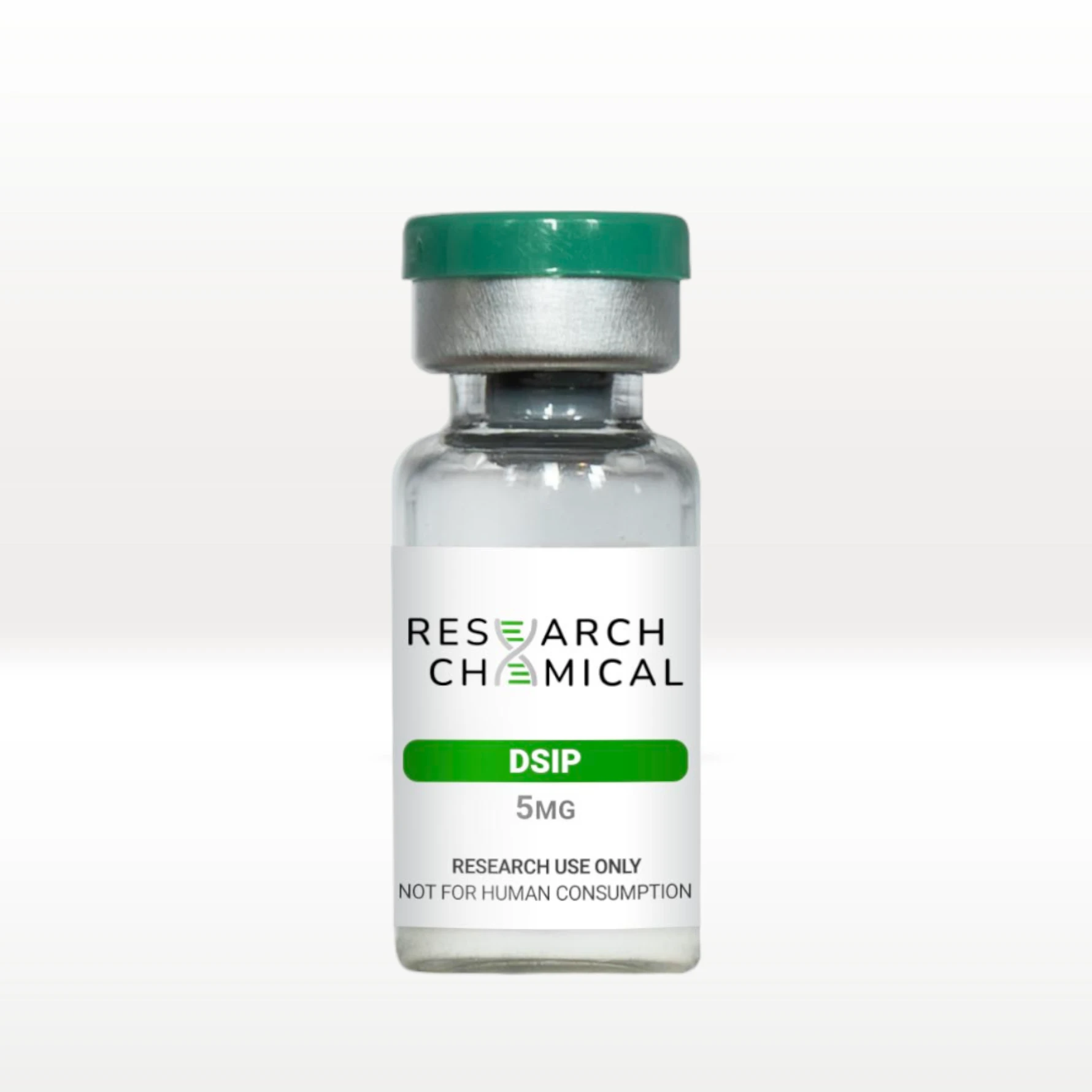
DSIP is a synthetic peptide supplied exclusively for laboratory and analytical research purposes. This compound is studied in controlled research environments for its role in neuropeptide signaling research, peptide–receptor interaction modeling, and experimental central nervous system pathway investigations.
Each batch of DSIP is independently third-party tested to verify identity and purity, supporting accuracy and reproducibility in scientific research applications.
DSIP is studied in laboratory and preclinical research environments to better understand how short neuropeptides participate in cellular signaling and regulatory pathway modeling. Researchers examine this compound to explore:
As a synthetic research peptide, DSIP serves as a tool compound for investigating neuropeptide signaling characteristics in controlled experimental systems.
In experimental models, DSIP is examined for its interaction with cellular signaling pathways involved in neuropeptide communication. Research focuses on signal modulation, pathway interaction mapping, and molecular response observation within controlled laboratory environments.
These investigations are mechanistic and exploratory and do not imply sleep induction, circadian regulation, neurological effects, or therapeutic outcomes.
Neuropeptides function as chemical messengers that modulate signaling between neurons and between the nervous and endocrine systems. DSIP has been studied within this framework to better understand:
Rather than being examined in isolation, DSIP is often studied as part of broader neuropeptide signaling networks, helping researchers explore how small peptides influence complex biological systems.
Research involving DSIP has explored its association with several signaling and regulatory pathways, including:
These investigations focus on mechanistic understanding rather than on physiological or behavioral outcomes.
DSIP supplied by ResearchChemical.com is produced under controlled peptide synthesis conditions to support compound integrity, purity, and reproducibility.
Manufacturing and verification standards include:
These measures ensure transparency and reliability for laboratory research use.
Laboratory supplies and dilution solutions are not included.
Research Chemical products are third-party tested by MZ Biolabs, an independent laboratory based in Arizona. Each batch is analyzed to ensure accuracy, purity, and that all specifications are met.
Store DSIP in a cool, dry environment away from direct light. Refrigerate after reconstitution, if applicable, to maintain peptide stability.
Avoid repeated freeze-thaw cycles and follow standard laboratory handling protocols to prevent contamination or degradation.
By purchasing from ResearchChemical.com, you acknowledge that you are acquiring research chemicals intended solely for scientific investigation.
DSIP is:
The information provided on this website is for educational and informational purposes only and should not be interpreted as medical advice. ResearchChemical.com assumes no liability for misuse, improper handling, or use outside of controlled research environments. It is the purchaser’s responsibility to ensure compliance with all applicable laws and regulations.
The effects of DSIP (Delta Sleep-Inducing Peptide) indicated by recent laboratory research studies include promoting slow-wave sleep, improve sleep patterns, regulate blood pressure, stress-protective potency, and potentially influencing pain perception and chronic pain syndromes.
DSIP is a hypothalamic hormone that plays a primary role in sleep wake cycles, sleep regulation and the promotion of slow-wave sleep. Studies show promise in improving sleep patterns, reducing pain perception, and regulating blood pressure.
DSIP (Delta Sleep-Inducing Peptide) has not been reported to have significant side effects, and it is generally well-tolerated in laboratory settings. Clinical studies have shown that it has an effect on central nervous system functioning where it can promote sleep without causing major adverse effects. Human sleep behavior is still under study as these are research chemicals used in clinical settings.
DSIP has potential therapeutic benefits, including promoting slow-wave sleep, improving sleep patterns, and regulating blood pressure as explored by recent researchers. Additionally, research shows it exhibits stress-protective potency and may have implications in pain perception and chronic pain syndromes.
Lorem ipsum dolor sit amet, consectetur adipiscing elit. Ut elit tellus, luctus nec ullamcorper mattis, pulvinar dapibus leo.
Research Chemical products are third-party tested by MZ Biolabs, an independent laboratory based in Arizona. Each batch is analyzed to ensure accuracy, purity, and that all specifications are met.
By purchasing from ResearchChemical.com, you acknowledge that you are acquiring research chemicals intended solely for scientific investigation.
DSIP is:
The information provided on this website is for educational and informational purposes only and should not be interpreted as medical advice. ResearchChemical.com assumes no liability for misuse, improper handling, or use outside of controlled research environments. It is the purchaser’s responsibility to ensure compliance with all applicable laws and regulations.
2. Amzica, F., & Steriade, M. (1997). The K-complex: its slow (< 1-Hz) rhythmicity and relation to delta waves. Neurology, 49(4), 952-959.
3. McCarley, R. W. (2007). Neurobiology of REM and NREM sleep. Sleep medicine, 8(4), 302-330.
4. Lichtigfeld, F. J., & Gillman, M. A. (1994). Psychotropic analgesic nitrous oxide and neurotransmitter mechanisms involved in the alcohol withdrawal state. International journal of neuroscience, 76(1-2), 17-33.
5. Mu Y, Gage FH. Adult hippocampal neurogenesis and its role in Alzheimer’s disease. Molecular Neurodegeneration. 2011 Dec;6:85. doi: 10.1186/1750-1326-6-85.
6. Shvetsov, A. V., Batotsyrenova, E. G., Dyuzhikova, N. A., Kashuro, V. A., Lapina, N. V., Dolgo-Saburov, V. B., & Ivanov, M. B. (2016). STUDY OF THE COMBINED INFLUENCE OF SODIUM THIOPENTAL AND DELTA SLEEP-INDUCING PEPTIDE ON ANTIOXIDANT DEFENSE SYSTEM IN RATS. Toxicological Review, (5), 49-52.
7. Segal, M. B., Zlokovic, B. V., Segal, M. B., & Zlokovic, B. V. (1990). Immunological and other aspects of the blood—brain barrier. The Blood-Brain Barrier, Amino Acids and Peptides, 179-188.
8. Vignati, S., Albertini, V., Rinaldi, A., Kwee, I., Riva, C., Oldrini, R., … & Catapano, C. V. (2006). Cellular, molecular consequences of peroxisome proliferator-activated receptor-δ activation in ovarian cancer cells. Neoplasia, 8(10), 851-IN12.
9. Graf, M. V., & Kastin, A. J. (1984). Delta-sleep-inducing peptide (DSIP): a review. Neuroscience & Biobehavioral Reviews, 8(1), 83-93.
10. Sailesh, K. S., & Mukkadan, J. (2013). Controlled vestibular stimulation: A novel treatment for insomnia. System, 12, 13.
11. Moore, P., Landolt, H. P., Seifritz, E., Clark, C., Bhatti, T., Kelsoe, J., … & Gillin, J. C. (2000). Clinical and physiological consequences of rapid tryptophan depletion. Neuropsychopharmacology, 23(6), 601-622.
12. Korbonits, M., Kaltsas, G., Perry, L. A., Putignano, P., Grossman, A. B., Besser, G. M., & Trainer, P. J. (1999). The growth hormone secretagogue hexarelin stimulates the hypothalamo-pituitary-adrenal axis via arginine vasopressin. The Journal of Clinical Endocrinology & Metabolism, 84(7), 2489-2495.
Please note that the above references provide evidence for the potential benefits of DSIP Peptide as stated in the product description. For more in-depth information, kindly refer to these scholarly works.
Join our insider list for the latest research insights, product releases, and special offers—delivered straight to your inbox.