$49.99
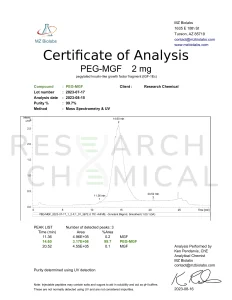
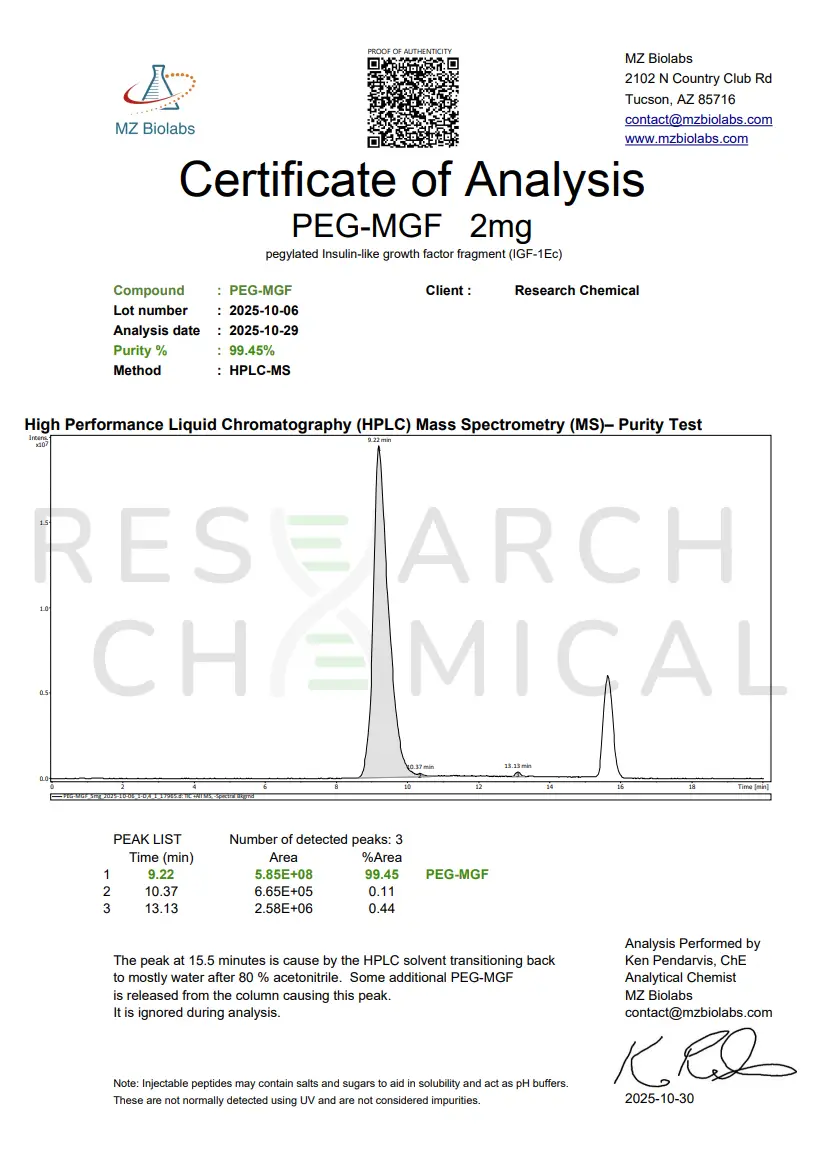
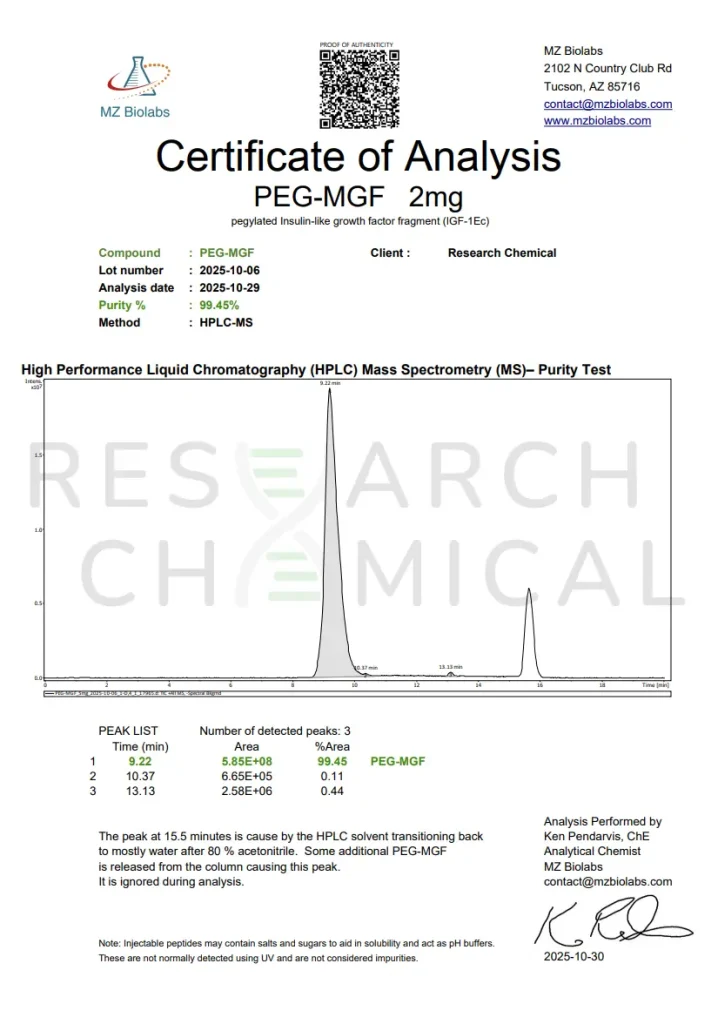
This item has been third-party tested by accredited U.S. laboratories and confirmed to meet a minimum purity of 98% through rigorous verification standards.
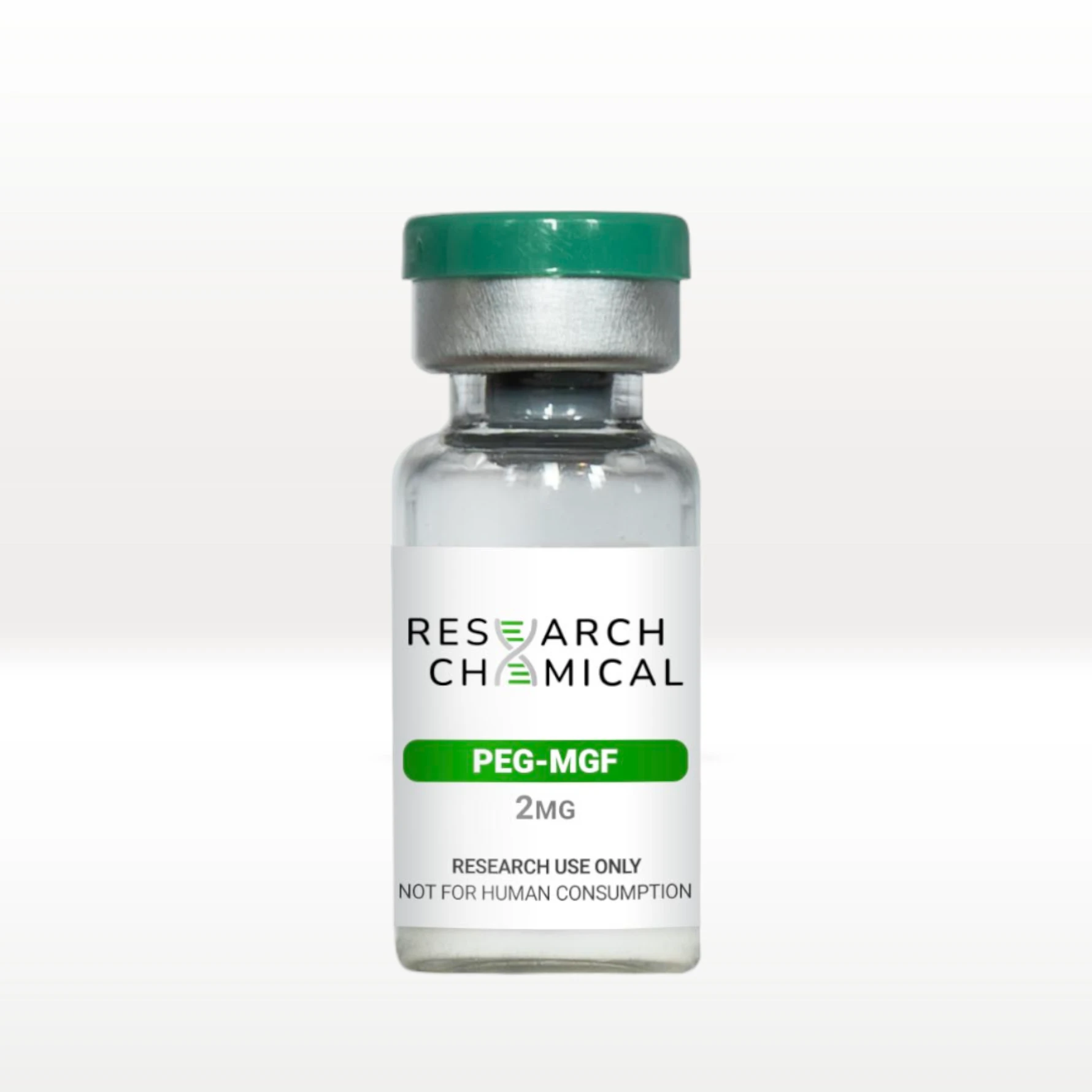
PEG-MGF is examined in research settings as a PEGylated analog of mechano growth factor (MGF), an IGF-1 splice variant. Research involving PEG-MGF focuses on peptide modification strategies (PEGylation), receptor interaction behavior, and signaling persistence models under controlled laboratory conditions.
$49.99
468 in stock
PEGylated Mechano Growth Factor Analog Peptide
PEG-MGF is a PEGylated peptide supplied exclusively for laboratory and analytical research purposes. This compound is studied in controlled research environments for its role in insulin-like growth factor (IGF) splice-variant signaling research, peptide stability modeling, and receptor-associated pathway investigations.
Each batch of PEG-MGF is independently third-party tested to verify identity and purity, supporting accuracy and reproducibility in scientific research applications.
PEG-MGF is studied in laboratory and preclinical research environments to better understand how peptide modification alters stability, circulation time, and signaling characteristics. Researchers examine this compound to explore:
As a PEGylated analog, PEG-MGF provides a controlled model for studying how chemical modification influences peptide signaling in experimental systems.
In experimental models, PEG-MGF is examined for its interaction with cellular signaling pathways associated with IGF-related receptor systems. Research focuses on signal initiation, pathway modulation, and temporal signaling behavior within controlled laboratory environments.
These investigations are mechanistic and exploratory and do not imply tissue repair, regeneration, performance, or therapeutic outcomes.
PEG-MGF supplied by ResearchChemical.com is produced under controlled peptide synthesis and PEGylation conditions to support compound integrity, purity, and reproducibility.
Manufacturing and verification standards include:
These measures ensure transparency and reliability for laboratory research use.
Laboratory supplies and dilution solutions are not included.
Research Chemical products are third-party tested by MZ Biolabs, an independent laboratory based in Arizona. Each batch is analyzed to ensure accuracy, purity, and that all specifications are met.
Store PEG-MGF in a cool, dry environment away from direct light. Refrigerate after reconstitution, if applicable, to maintain peptide stability. Avoid repeated freeze-thaw cycles and follow standard laboratory handling protocols to prevent contamination or degradation.
By purchasing from ResearchChemical.com, you acknowledge that you are acquiring research chemicals intended solely for scientific investigation.
PEG-MGF is:
The information provided on this page is for educational and informational purposes only and should not be interpreted as medical advice. ResearchChemical.com assumes no liability for misuse, improper handling, or use outside of controlled research environments. It is the purchaser’s responsibility to ensure compliance with all applicable laws and regulations.

MGF plays a key role in activating muscle stem cells called satellite cells, which reside adjacent to skeletal muscle fibers. When activated, satellite cells proliferate and differentiate to facilitate muscle repair and regeneration. Research indicates PEG-MGF may enhance satellite cell activation and muscle growth beyond natural MGF.
PEG MGF is known for its ability to promote skeletal muscle regeneration, improve muscle repair, increase muscle growth, and is gaining traction for its effect on enhanced fat metabolism in recent research studies.
PEG MGF is a modified form of the Mechano Growth Factor (MGF) peptide, designed with polyethylene glycol (PEG) to extend its half-life and enhance its properties.
The main difference between MGF and the PEG MGF peptide lies in their half-life and bioactivity. PEG MGF, being pegylated, has a longer half-life, leading to better stability and more sustained effects compared to the non-modified MGF.
Lorem ipsum dolor sit amet, consectetur adipiscing elit. Ut elit tellus, luctus nec ullamcorper mattis, pulvinar dapibus leo.
Research Chemical products are third-party tested by MZ Biolabs, an independent laboratory based in Arizona. Each batch is analyzed to ensure accuracy, purity, and that all specifications are met.

By purchasing from ResearchChemical.com, you acknowledge that you are acquiring research chemicals intended solely for scientific investigation.
PEG-MGF is:
The information provided on this page is for educational and informational purposes only and should not be interpreted as medical advice. ResearchChemical.com assumes no liability for misuse, improper handling, or use outside of controlled research environments. It is the purchaser’s responsibility to ensure compliance with all applicable laws and regulations.

1. Song, Y. H., Song, J. L., Delafontaine, P., & Godard, M. P. (2013). The therapeutic potential of IGF-I in skeletal muscle repair. Trends in Endocrinology & Metabolism, 24(6), 310-319.
2. Goldspink, P. H., Goldspink, G., & Górecki, D. C. (2012). Mechano-Growth Factor: an important cog or a loose screw in the repair machinery
3. Peña, J. R., Pinney, J. R., Ayala, P., Desai, T. A., & Goldspink, P. H. (2015). Localized delivery of mechano-growth factor E-domain peptide via polymeric microstructures improves cardiac function following myocardial infarction. Biomaterials, 46, 26-34.
4. Ji, W., Sun, Y., Yang, F., van den Beucken, J. J., Fan, M., Chen, Z., & Jansen, J. A. (2011). Bioactive electrospun scaffolds delivering growth factors and genes for tissue engineering applications. Pharmaceutical research, 28, 1259-1272.
5. Geiger, B. C., Wang, S., Padera Jr, R. F., Grodzinsky, A. J., & Hammond, P. T. (2018). Cartilage-penetrating nanocarriers improve delivery and efficacy of growth factor treatment of osteoarthritis. Science translational medicine, 10(469), eaat8800.
6. Zhang, L., Hu, J., & Athanasiou, K. A. (2009). The role of tissue engineering in articular cartilage repair and regeneration. Critical Reviews™ in Biomedical Engineering, 37(1-2).
7. Chen, G., & Lv, Y. (2015). Immobilization and application of electrospun nanofiber scaffold-based growth factor in bone tissue engineering. Current pharmaceutical design, 21(15), 1967-1978.
8. Dłużniewska, J., Sarnowska, A., Beręsewicz, M., Johnson, I., Srai, S. K., Ramesh, B., … & Zabłocka, B. (2005). A strong neuroprotective effect of the autonomous C‐terminal peptide of IGF‐1 Ec (MGF) in brain ischemia. The FASEB journal, 19(13), 1896-1898.
9. Wang, M., Liang, Y., Chen, K., Wang, M., Long, X., Liu, H., … & He, B. (2022). The management of diabetes mellitus by mangiferin: advances and prospects. Nanoscale, 14(6), 2119-2135.
10. Doroudian, G., Pinney, J., Ayala, P., Los, T., Desai, T. A., & Russell, B. (2014). Sustained delivery of MGF peptide from microrods attracts stem cells and reduces apoptosis of myocytes. Biomedical microdevices, 16, 705-715.
Please note that the above references provide evidence for the potential benefits of PEG MGF Peptide as stated in the product description. For more in-depth information, kindly refer to these scholarly works.


Join our insider list for the latest research insights, product releases, and special offers—delivered straight to your inbox.